
You are using an out of date browser. It may not display this or other websites correctly.
You should upgrade or use an alternative browser.
You should upgrade or use an alternative browser.
Do you know ?
- Thread starter lrburdak
- Start date

Chaudhari Ramvir Singh of Gwalior passed away
Chaudhari Ramvir Singh of Gwalior President (Jat Samaj Kalyan Parishad, Gwalior) and Patron (Akhil Bhartiya Sarv Jat Mahasabha) passed away on 25.3.2016. Condolence meeting of Late Ch Ramvir Singh was held on 3 April 2016 at 11 am, Deputy speaker hall, Constitution Club, Rafi Marg, New Delhi
Chaudhari Ramvir Singh was an instrument in the foundation of Jat Samaj Kalyan Parishad Gwalior.
He took lot of pains to unearth Jat history in the Gwalior region. Two important books on Jat History were published by Jat Samaj Kalyan Parishad Gwalior under his guidance, which are
1. Published book on Jat History by Dr Natthan Singh: Jat - Itihas (Hindi), Jat Samaj Kalyan Parishad Gwalior, 2004,
2. Published book - Sujas Prabandh, Translation of poetry by Nathan, the royal poet of Jat rulers of Gohad, Jat Samaj Kalyan Parishad Gwalior, 2005
We pay homage to him by creating page for him on Jatland - http://www.jatland.com/home/Ramvir_Singh_Baswan
29 May 1658 in History of India and Jat History
Samugarh is a town about 20 km east of Agra, south of the Yamuna River. It is known for the Battle of Samugarh which took place on May 29, 1658. Samugarh was a tipping point in India’s history which is associated with Jat History as well.
Battle of Samugarh: The battle of Samugarh, Jang-e-Samugarh, (May 29, 1658), was a decisive battle in the struggle for the throne during the Mughal war of succession (1658–1659) between the sons of the Mughal Emperor Shah Jahan after the emperor's serious illness in September 1657. The battle of Samugarh was fought between his sons Dara Shikoh (the eldest son and heir apparent) and his two younger brothers Aurangzeb and Murad Baksh (third and fourth sons of the Mughal Emperor Shah Jahan).[SUP][1][/SUP][SUP][2]
[/SUP] Two great Mughal armies, led by Shah Jahan’s eldest son Dara Shikoh and his third son Aurangzeb, clashed on a dusty plain 20 km southeast of Agra. It was not only a battle for the Mughal throne, but a battle for the very soul of India. Dara was on the brink of victory when he was betrayed by one of his commanders, Khalilullah Khan. He then retreated to Lahore and then down the Indus. Eventually, he was brought to Delhi and put on trial. [SUP][3][/SUP]
Dara Shikoh began to retreat towards Samugarh, about 20 km east of Agra, south of the Yamuna River, after Aurangzeb had defeated Dara Shikoh's forces during the Battle of Dharmat. Aurangzeb and his smaller but formidable army then flanked Dara’s fortified line along the Chambal River by finding a little-known and unguarded ford. The battle was fought during northern India's warmest season and Aurangzeb's men were on the march for a very long while. The army of Aurangzeb arrived with yellow banners and flags and fortified their position in front of the heir apparent. Dara Shikoh then tried to protect his rear flank by erecting massive red tents and banners.
The outcome of the battle was decided when Dara Shikoh's descended from his Elephant Howdah at the most critical moment of the battle, his elephant then quickly fled from the battlefield. Fleeing elephant was evidence enough for Dara Shikoh's troops who mistook this event to indicate his death. Thousands of Dara Shikohs forces surrendered to Aurangzeb when the Mughal military band of Aurangzeb played the ode of victory. Many more Sepoys and Sowars fled only to take the oath of allegiance to Aurangzeb later on. If Dara Shikoh had won at Samugarh his rule might have promoted harmony between India’s turbulent peoples. A united Mughal empire may have prevented India from becoming so easily colonised by European powers. Samugarh marked the beginning of Islamic bigotry that led over the centuries to the Partition of India, the creation of Pakistan and the backlash of radical Hinduism. Samugarh was a tipping point in India’s history. [SUP][4][/SUP]
Gohad Jat zamindar helps Aurangzeb
One incident has been mentioned by Ishwar Das is that when Prince Aurangzeb, on his way to oppose Dara Shikoh, came to the fords of Chambal, he found them barred by the opposite entrenchment. He was ignorant about other ferries, while the waters were deep. This perturbed Aurangzeb. At this critical juncture Hathi Singh Jat, a zamindar of Gohad, came forward to lead his troops to a neglected ford (Kanira), where from Aurangzeb crossed the Chambal. Though by itself a small incident, it in one stroke turned the scales against Dara Shikoh. He had to hurry up for the Capital, leaving heavy artillery behind, which greatly weakened his position. [SUP][5][/SUP] [SUP][6]
[/SUP]
Churaman plundered sons of Aurangzeb
Ram Sarup Joon[SUP][7][/SUP] tells that ...In 1704, he regained the fort of Sinsini from the Moguls. When a war was going on between Bahadur Shah and Azam, the two sons of Aurangzeb, Churaman plundered both the armies near Samugarh. Later, Bahadur Shah, who emerged victorious offered to appoint him Sardar of 500 horsemen, and 1,000 footmen to win over his support. This lure, however, did not work with Churaman and he remained independent.
References
- 1. "Battle of Samugarh | Mughal history | Encyclopedia Britannica". britannica.com
- 2. TOI Edit Page 28.5.2016, by Murad Ali Baig
- 3.TOI Edit Page 28.5.2016, by Murad Ali Baig
- 4. TOI Edit Page 28.5.2016, by Murad Ali Baig
- 5. Ishwar das (Fatuhat, Pers.Ms.,23a)
- 6. G. C. Dwivedi, The Jats: Their role in the Mughal Empire, Ed Dr Vir Singh, Delhi, 2003, p. 54, f.n.108
- 7. History of the Jats/Chapter X ,p.157
Last edited:
Dr Dhiraj Singh (Thakural) : Senior Agricultural Scientist of CAZARI Pali centre was awarded with Swami Sahjanand Saraswati Outstanding Extension Scientist Award-2015 on 16.7.2016 at Vigyan Bhawan Delhi by Minister of Agriculture Govt of India.
Padma Vibhushan (पद्म विभूषण) is the second-highest civilian award of the Republic of India, preceded by Bharat Ratna.
[h=2]Jat recipients of Padma Vibhushan[/h]
[h=2]Jat recipients of Padma Vibhushan[/h]
- Arjan Singh Aulakh - 1965
- Dr M S Gill - retired IAS, Ex Chief Election Commissioner and Minister of Sports, Govt of India.
- Lt Gen. Harbaksh Singh- 1965
Jat Historians on Jatland
We have compiled information about Historians who have written about Jats. You can see here - http://www.jatland.com/home/Jat_Historians
There are two types of historians in the list.
Jats who have written about Jats - They have been simply categorized as Jat Historians. You may see here - http://www.jatland.com/home/Category:Jat_Historians
Others are non-Jats but have written about Jats. They have been categorized as General Historians. You may see them here - http://www.jatland.com/home/Category:General_Historians
Battle Of Tilpat
The Battle Of Tilpat was fought by Jats with Aurangzeb under the leadership of Gokul Singh at Tilpat in Faridabad district of Haryana in last week of 1669 against oppressive policies of Aurangzeb.
Emperor Aurangzeb had to march himself on November 28, 1669 from Delhi to curb the Jat menace.
You may read here - https://www.jatland.com/home/Battle_Of_Tilpat
The Siege Of Bharatpur took place by British Forces under the leadership of Lord Lake in January 1805.
The fort of Bharatpur is the only fort in India which was never physically captured by the British.
Read more at - The Siege Of Bharatpur
The fort of Bharatpur is the only fort in India which was never physically captured by the British.
Read more at - The Siege Of Bharatpur
[h=2]Jat Dharmshalas[/h]There are large number of Jat Dharmshalas constructed by Jats in various states. You may use them while touring these places. I have compiled these alphabetically city and state wise. You may add mobile or Phone numbers for better communication. See - List of Jat Dharmshalas
6 February 2006 Gurbaksh Singh Dhillon :died on this date
Gurbaksh Singh Dhillon (b.March 18, 1914 - d.February 6, 2006) was an officer in the Indian National Army who was charged with "waging war against His Majesty the King Emperor". Along with Gen. Shah Nawaz Khan and Col. Prem Kumar Sahgal, he was tried by the British at the end of World War II in the INA trials that began on November 5, 1945 at Red Fort. Dhillon also played an important role in the Indian independence negotiations.
Read here - Gurbaksh Singh Dhillon
[h=1]Teja Foundation[/h]
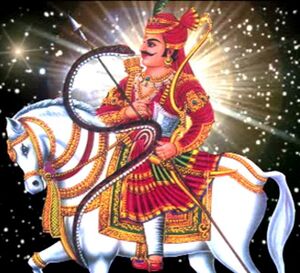
Teja Foundation is a social and community development organization based at Jaipur in Rajasthan. It is registered under Rajasthan Societies Registration Act,1958. An executive body is constituted to run the affairs of the Foundation. The Foundation derives its name from the legendary folk-deity Tejaji. Teja Foundation has central office at 'Teja Apartment', 17 - Santoshnagar, Ganga Jamuna Petrol Pump Circle, Gopalpura Bypass, Jaipur-302020, Rajasthan. For more details one can contact at Mob:9521051438. Presently Teja Foundation has undertaken two activities:1. Udaan Jaipur, Community Coaching Centre at Jaipur, and 2. Jat History Writing.
Read more at https://www.jatland.com/home/Teja_Foundation
Satish Dagar - Dy.S.P. CBI who probed the Baba Ram Rahim rape case and sent him to Jail.
डेरा प्रमुख गुरमीत राम रहीम मामले को अंजाम तक पहुंचाने वाला असली हीरो ....सीबीआई के जाबांज़ डीएसपी सतीश डागर न होते तो यह केस अपने मुकाम पर नहीं पहुंच पाता. सतीश डागर ने ही साध्वियों को सामने आने के लिए मानसिक रूप से तैयार किया था. सतीश डागर नहीं होते ये लोग खौफ का सामना नहीं कर पाते. सतीश डागर पर भी बहुत दबाव पड़ा, मगर वे नहीं झुके. बड़े-बड़े आईपीएस ऐसी हिम्मत नहीं जुटा पाते हैं मगर डीएसपी सतीश डागर ने कमाल का साहस दिखाया है. पहले पंचकूला से सीबीआई की कोर्ट अंबाला में थी. जब ये लोग वहां सुनवाई के लिए जाते थे तब वहां भी बाबा के समर्थकों की भीड़ आतंक पैदा कर देती थी. हालत यह हो गई कि जिस दिन सुनवाई होती थी और बाबा की पेशी होती थी उस दिन अंबाला पुलिस लाइन के भीतर एसपी के ऑफिस में अस्थायी कोर्ट बनाया जाता था. छावनी के बाहर समर्थकों का हुजूम होता था. ऐसी हालत में उन दो साध्वियों ने गवाही दी और डटी रहीं, आसान बात नहीं उस बाबा के खिलाफ जिससे मिलने कांग्रेस, भाजपा के बड़े-बड़े नेता सलामी देने जाते हैं
डेरा प्रमुख गुरमीत राम रहीम मामले को अंजाम तक पहुंचाने वाला असली हीरो ....सीबीआई के जाबांज़ डीएसपी सतीश डागर न होते तो यह केस अपने मुकाम पर नहीं पहुंच पाता. सतीश डागर ने ही साध्वियों को सामने आने के लिए मानसिक रूप से तैयार किया था. सतीश डागर नहीं होते ये लोग खौफ का सामना नहीं कर पाते. सतीश डागर पर भी बहुत दबाव पड़ा, मगर वे नहीं झुके. बड़े-बड़े आईपीएस ऐसी हिम्मत नहीं जुटा पाते हैं मगर डीएसपी सतीश डागर ने कमाल का साहस दिखाया है. पहले पंचकूला से सीबीआई की कोर्ट अंबाला में थी. जब ये लोग वहां सुनवाई के लिए जाते थे तब वहां भी बाबा के समर्थकों की भीड़ आतंक पैदा कर देती थी. हालत यह हो गई कि जिस दिन सुनवाई होती थी और बाबा की पेशी होती थी उस दिन अंबाला पुलिस लाइन के भीतर एसपी के ऑफिस में अस्थायी कोर्ट बनाया जाता था. छावनी के बाहर समर्थकों का हुजूम होता था. ऐसी हालत में उन दो साध्वियों ने गवाही दी और डटी रहीं, आसान बात नहीं उस बाबा के खिलाफ जिससे मिलने कांग्रेस, भाजपा के बड़े-बड़े नेता सलामी देने जाते हैं
Satish Dagar - Dy.S.P. CBI who probed the Baba Ram Rahim rape case and sent him to Jail.
........., आसान बात नहीं उस बाबा के खिलाफ जिससे मिलने कांग्रेस, भाजपा के बड़े-बड़े नेता सलामी देने जाते हैं
this is what I call vote bank of any political winner especially in today's case of Modi Government. Great goings, but I am assured by administrative class who ignore biasness of any powerful force, and is devoted in their ownership.
What is significance of Teja Dashmi ?
Teja Dasami is observed on Bhadrapada Shukla Dashmi by all communities and is celebrated mainly in Rajasthan, Madhya Pradesh and Haryana. Tejaji martyred himself on Bhadrapada Shukla Dashmi in V.S. 1160 (Saturday 28 August 1103 AD) fighting with the enemies for the protection of cows at Sursura, Kishangarh, Ajmer. This year Teja Dashami date was August 31, 2017.
Read more at https://www.jatland.com/home/Teja_Dashmi
मैं आजकल ठाकुर देशराज की पुस्तक रियासती भारत के जाट जन सेवक, 1949 को जाट लैंड विकि पर जोड़ रहा हूँ। आप इसे साथ-साथ पढ़ सकते हैं। यह लिंक देखें - Jat Jan Sewak
रियासती भारत के जाट जन सेवक, 1949 पुस्तक में राजस्थान से स्वतन्त्रता आंदोलन में भाग लेने वाले तथा जाट जागृति में सहयोग करने वाले सभी महानुभावों का परिचय दिया गया है। ठाकुर देशराज ने राजस्थान के जाटों में सामाजिक और राजनैतिक क्रांति पैदा की और एक बहादुर कौम को नींद से जगाया। राजस्थान के अलावा पुस्तक में पंजाब, मध्यभारत, बुंदेल खंड की रियासतों के जाटों की आधुनिक गतिविधियों का संक्षिप्त इतिहास भी दिया गया है। यहाँ जाटलैंड पर पुस्तक से पृष्ठवार संक्षिप्त विवरण दिया जा रहा है।
रियासती भारत के जाट जन सेवक, 1949 संपादक: ठाकुर देशराज [पृ.4] पर लिखते हैं :
यह कड़वी सचाई है कि जाट कौम में साहित्यिक रुचि नहीं है इसलिए उन्हें अपने कारनामे लेखबद्ध कराने व देखने की रुचि नहीं है। इस प्रकार की गलती ने उनके दर्जे को घटाया ही है। लोगों की इस ओर विशेष रुचि न होते हुये भी लेखक को यह पुस्तक लिखनी पड़ी है।
एक समय आएगा जब यह पुस्तक हमारे गौरव को बढ़ाने में सहायक होगी और इस जमाने के लोगों की व हमारी भावी पीढ़ी में उत्साह और प्रेरणा पैदा करने का काम देगी। आने वाली संतान अपने उन पूज्यों को सराहेगी जिन्होने इस जमाने में कुछ काम किया है।
Nathuram Mirdha
Nathuram Mirdha (20.10.1921-30.8.1996) was a great parliamentarian, freedom fighter, social reformer and popular farmer leader of Marwar region in Rajasthan, India. He was popularly known as Gandhi Baba of Rajasthan.

Read more about him - https://www.jatland.com/home/Nathuram_Mirdha
Nathuram Mirdha (20.10.1921-30.8.1996) was a great parliamentarian, freedom fighter, social reformer and popular farmer leader of Marwar region in Rajasthan, India. He was popularly known as Gandhi Baba of Rajasthan.
Read more about him - https://www.jatland.com/home/Nathuram_Mirdha
रियासती भारत के जाट जन सेवक, 1949 संपादक: ठाकुर देशराज [पृ.4] पर लिखते हैं :
यह कड़वी सचाई है कि जाट कौम में साहित्यिक रुचि नहीं है इसलिए उन्हें अपने कारनामे लेखबद्ध कराने व देखने की रुचि नहीं है। इस प्रकार की गलती ने उनके दर्जे को घटाया ही है। लोगों की इस ओर विशेष रुचि न होते हुये भी लेखक को यह पुस्तक लिखनी पड़ी है।
एक समय आएगा जब यह पुस्तक हमारे गौरव को बढ़ाने में सहायक होगी और इस जमाने के लोगों की व हमारी भावी पीढ़ी में उत्साह और प्रेरणा पैदा करने का काम देगी। आने वाली संतान अपने उन पूज्यों को सराहेगी जिन्होने इस जमाने में कुछ काम किया है।
We people have restricted ourselves to the board pattern syllabus, harldy go by religious understanding and community works.