Research on history of Jat clans

[h=2]Research on History of Guleria Clan (Contd)[/h]
[h=2]History[/h]

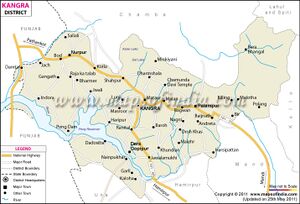
Kangra District Map


The history of Guleria clan is available from 7th century. It is said that the Guler clan had a state in Himachal Pradesh about in 7th century. Guler state was situated to S.W. of Kangra. Its capital was Haripur Guler. The smaller chiefship of Guler was offshoot from the parent stem of Kangra. The independence of Guler, or Haripur, was established by Hari Chandra, about A.D. 1400, when he yielded Kangra to his younger brother, Karmma Chandra. [SUP][12][/SUP]
 
Research on History of Guleria Clan (Contd)

Alexander Cunningham on Guler

Alexander Cunningham[SUP][13][/SUP] describes about the Hill States of the Punjab as the Chinese pilgrim Hwen Thsang has noticed so few of the many hill-states of the Panjab.
According to popular opinion the petty states of the Alpine Panjab, at the present time, consist of twenty-two Muhammadan and twenty-two Hindu chiefships, the former lying to the west, and the latter to the east of the Chenab river. [SUP][14][/SUP]
An older classification divides them into three groups, each named after the most powerful state which formed the head of the confederation[SUP][15][/SUP]. These were:

This division into three groups most probably existed prior to the seventh century, as we find that the states to the east of the Ravi were quite independent of Kashmir, while those of Urasa, Punach, and Rajapuri are spoken of in such a way as to show that they had kings of their own previous to their subjection by Kashmir.[SUP][16][/SUP]
The Gakar chiefs hold the lower valley of the Jhelam, and the upper course of the Haro river to the south-west of Kashmir. The Gakars also occupy several portions of the eastern Doab, as Guliana, near Gujar Khan, and Bugial, under the lofty hill of Balnath. But these districts do not properly belong to the hills, although they were subject to Kashmir at the time of Hwen Thsang's visit in the seventh century. [SUP][17][/SUP]

Alexander Cunningham[SUP][18][/SUP]provides us the list which gives the names and positions of the various states attached to the eastern, or Jalandhar (Trigartta) division of the Alpine Panjab.
[TABLE="class: wikitable"]
<tbody>[TR]
[TH] Vansha[/TH]
[TH] State[/TH]
[/TR]
[TR]
[TD]Somvansi[/TD]
[TD] 1. Kangra, or Katoch.[/TD]
[/TR]
[TR]
[TD][/TD]
[TD] 2. Guler, to S.W. of Kangra.[/TD]
[/TR]
[TR]
[TD][/TD]
[TD] 3. Jaswal, on Suhan River.[/TD]
[/TR]
[TR]
[TD][/TD]
[TD] 4. Datarpur, on lower Bias River.[/TD]
[/TR]
[TR]
[TD][/TD]
[TD] 5. Siba, on lower Bias River.[/TD]
[/TR]
[TR]
[TD] Surajvansi[/TD]
[TD] 6.Chamba, on Ravi River.[/TD]
[/TR]
[TR]
[TD][/TD]
[TD] 7. Kullu, on upper Bias River.[/TD]
[/TR]
[TR]
[TD] Pundir, or Pandayas.[/TD]
[TD] 8.Mandi, on middle Bias River.[/TD]
[/TR]
[TR]
[TD][/TD]
[TD] 9. Sukhet, to south of Mandi.[/TD]
[/TR]
[TR]
[TD][/TD]
[TD] 10. Nurpur, between Ravi River and Bias River.[/TD]
[/TR]
[TR]
[TD][/TD]
[TD] 11. Kotila, to East of Nurpur.[/TD]
[/TR]
[TR]
[TD][/TD]
[TD] 12. Kotlehar.[/TD]
[/TR]
</tbody>[/TABLE]
Of these twelve states no less than five are mere subdivisions of the once rich kingdom of Jalandhar, which embraced the whole of the Doab, or plain country, between the Bias and Satlej, and all the hill country lying between the Ravi and the frontiers of Mandi and Sukket, to the south of the Dhaola-dhar mountains. This included Nurpur, Kotila, and Kotlehar ; and as Mandi and Sukhet were at first under one rule, there were originally only four chiefships in the eastern division of the Alpine Panjab, namely, Jalandhar, Chamba, Kullu, and Mandi.
 
[h=2]Research on History of Guleria Clan (Contd)[/h]
Alexander Cunningham
[SUP][19][/SUP] writes that Since the occupation of the plains by the Muhammadans, the ancient kingdom of Jalandhara has been confined almost entirely to its hill territories, which were generally known by the name of Kangra, after its most celebrated fortress.
Alexander Cunningham[SUP][20][/SUP] writes that The royal family of Jalandhara and Kangra is one of the oldest in India, and their genealogy from the time of the founder, Susarma Chandra, appears to have a much stronger claim to our belief than any one of the long strings of names now shown by the more powerful families of Rajasthan. All the different scions of this house claim to be of Somavanshi descent ; and they assert that their ancestors held the district of Multan and fought in the Great War on the side of Duryodhan against the five Pandu brothers. After the war they lost their country, and retired under the leadership of Susarma Chandra to the Jalandhar Doab, where they established themselves, and built the stronghold of Kangra.
Alexander Cunningham writes that In the seventh century, the Chinese pilgrim, Hwen Thsang, was courteously entertained for a whole month by Raja U-ti-to, or Udita,[SUP][21][/SUP] whom I would identify with Adima of the genealogical lists. One hundred and sixty years later, in an inscription dated A.D. 804, the Raja of Jalandhara is named Jaya Chandra, who is the Jaya Malla Chandra of the lists, the seventh in descent from Adima. Lastly, Ananta, king of Kashmir, from A.D. 1028 to 1081, married two daughters of Indu Chandra, [SUP][22][/SUP] Raja of Jalandhara, who is the Indra Chandra of the genealogical lists of Kangra. These instances are sufficient to show that Jalandhara existed as an independent State for many centuries before the Muhammadan conquest. [SUP][23][/SUP]
The smaller chiefships of Guler, Jaswal, Datarpur, and Siba, are offshoots from the parent stem of Kangra. The independence of Guler, or Haripur, was established by Hari Chandra, about A.D. 1400, when he yielded Kangra to his younger brother, Karmma Chandra. [SUP][24][/SUP]
The date of the foundation of the other principalities is unknown, but I believe that they were always tributary to the parent state until the time of the Muhammadans, when the capture of Kangra by Mahmud of Ghazni afforded them an opportunity of asserting their independence. [SUP][25][/SUP]
Raja Utito, mentioned by Chinese pilgrim Hwen Thsang, was a tributary of Harsh Vardhana, who appear to have continued to rule over the country right up to the 12th century, with occasional interruptions, but their capital was Jalandhar and Kangra formed an important stronghold.
We find in above description provided by Alexander Cunningham that Guliana Rawalpindi (p.132) represented by Mohammadans and Guler state to S.W. of Kangra (p.136) represented by Hindu chiefs of Guler. We may believe that these were the ancestors of Guleria clan.
 
Last edited:
Research on History of Guleria Clan (Contd)

[h=2]H.A. Rose on Goleria[/h] H.A. Rose[SUP][26][/SUP] writes that the ancient ruling family of Datarpur belongs to Dadwal Rajput clan are said to take its name from Dada in Kangra on the Hoshiarpur border. The Dadwals are found in the neighbourhood of Datarpur, the seat of their former sovereignty, and on the south-west face of the Siwaliks in Hoshiarpur tahsil near Dholbaha and Jatiauri or Jankapuri, its ancient name, which is still used. Janak was an ancient Surajbansi ruler. The Dadwals are a branch of the Katoch and do not intermarry with them, or with the Golerias or Sibāyas on the ground of a common descent. They have an interesting local history which describes how they wrested the tract round Datarpur from a Chahng rāni.

H.A. Rose[SUP][27][/SUP] writes: Golera (गोलेरा), a tribe which gives its name to the tract in Rawalpindi so called. It is descended from its eponym, the third son of Qutb Shah, and in Sialkot has four branches, Golera, Kahambdrah, Dengla and Mandu.
I : Golera → Bindu → Tur → Dongla + Mandu
II : Golera → Bindu → Banjur → Bharahwia + Samduh + (Singi → Kahambirah)
According to Cracroft the Golera are Awans, a statement confirmed by their claim to descend from Qutb Shah.
Goleria (गोलेरिया), an offshoot of the great Rajput clan, the Katoch, bearing a territorial designation from Goler.

H. W. Bellew[SUP][28][/SUP] writes that the Khattak are two great divisions — Torman and Bolac. Torman, or Turan, is in two divisions — Tari and Taraki. Tari section includes Gul, who are for Goel or Gohil Chohan.
[h=2]History of Guler state[/h] Guler was a small precolonial Indian hill state in the Lower Himalayas. Its capital was the town of Haripur Guler, in modern-day Kangra district of Himachal Pradesh. The kingdom was founded in 1415 by Raja Hari Chand, a scion of the ancient royal family of Kangra. Raja Hari Chand, 1st Raja of Guler 1415 AD, he was originally the Raja of Kangra to 1415, but whilst hunting one day, he fell into a dry well, and was presumed dead, his brother was then named Raja of Kangra; he was eventually discovered, but rather than fight over his rights, he founded the town of Haripur on the flat below the fort, on the Banganga River; married and had issue.[SUP][29][/SUP]
In 1813 Guler State was annexed to British India, after a brief period of Jat Sikh rule under Maharaja Ranjit Singh. Bhup Singh (1765 - d. 1826) was the last ruling Raja. He accepted a jagir in Nandpur in 1826. The jagir was recognized by the British government in 1853. In 1877 his son Shamsher Singh died without male heirs and the state lapsed.
The rulers of Guler state

 
[h=2]Guleria History in Rajasthan[/h] History of Guleria clan from year 1573 AD is recorded by Pitha Ram Guleria in Sujangarh Jat Samaj Nirdeshika, 2015,pp.5-7. It states that two Guleria brothers developed differences with the thakur of Ladariya in Didwana tahsil of Nagaur district in Rajasthan over the issue of Tax collection. They came near the border of Jodhpur State and founded Gulerion Ki Dhani in 1573 AD at present Sujangarh where there was good soil and drinking water. When their population increased the Guleria people changed the name hamlet to 'Kharbuji Dhani' after person named Kharbuji Guleria in 1723 AD. Later thakur of Sandwa Churu constructed a fort here and it was called Kot Kharbuja/Kharbuji Kot/Kharbuji Ra Kot.[SUP][30][/SUP] Its name changed to Sujangarh after Sujan Singh who became ruler of Bikaner[SUP][31][/SUP] in 1737 AD.[SUP][32][/SUP]
It is matter of research how and when they came from Kangra (Himachal Pradesh) to Ladariya in Didwana tahsil of Nagaur district in Rajasthan. It is likely that they migrated after the invasion of Mahmud of Ghazni (997 to 1030 AD).
[h=2]Jat Monuments by Guleria clan[/h]

Jat Mandir Sujangarh


1. जाट मंदिर - गुलेरिया परिवार का एक भाई सुजानगढ़ से जाकर सालासर बस गए बाकि जाट मंदिर के पास बस गए। विक्रम संवत 1935 में दुलिया गाँव से कृष्ण की मूर्ति लाकर जाट मंदिर बनाया।[SUP][33][/SUP]
2. गुलेरिया सती मंदिर - संवत 1808 (1751 ई.) में सेवाराम गुलेरिया का देहांत हुआ तब उनकी पत्नी सती हुई जो आज एफ.सी.आई. गोदाम के पास सती मंदिर है। वर्ष 1969 में जब एफ.सी.आई. का निर्माण हुआ तो उस समय सतीमाता के मंदिर के लिए स्थान नहीं छोडने के कारण निर्माण अवरूद्ध हो गया तब एफ.सी.आई. ने मंदिर के लिए अलग स्थान छोडकर निर्माण करवाया। [SUP][34][/SUP]
3. नाथोजी गुलेरिया का तालाब - संवत 1835 (1778 ई.) में सुजानसिंह के नाम से गाँव का नाम सुजानगढ़ रखा गया। इसी संवत के आस पास नाथोजी गुलेरिया ने पशुओं के पीने के लिए नाथो तालाब खुदवाया।[SUP][35][/SUP]
4. श्याम मंदिर - खाटू श्याम में निर्माणाधीन
 
Research on History of Guleria Clan (Contd)

सुजानगढ़ में गुलेरिया गोत्र का इतिहास

<dl><dd>सुजानगढ़ को बसाने वाले गुलेरिया गोत्र का यह इतिहास पीथाराम गुलेरिया, सुजानगढ़ जाट समाज निर्देशिका, 2015, पृ. 5-7, से साभार लिया गया है। </dd></dl> सुजानगढ़ के इतिहास में प्रथम आधार-शिला समाज के गुलेरिया गोत्र के पूर्वजों ने रखी थी। विक्रम संवत 1630 (=1573 ई.) में डीडवाना मोलासर के पास लादड़िया गांव से जाट गुलेरिया परिवार के दो भाईयों की ठाकुर के साथ लाग-बाग के संबंध में अनबन हो गई जिससे वे गाँव छोडकर निकल गए। ठाकुर ने यह दवाब बनाया कि जो लादड़िया गांव में रहेगा उसको ठाकुर की जय बोलनी पड़ेगी। इस संबंध में एक लोकोक्ति प्रचलित है - लादड़िया में रहीं जको जय ठाकुर की कहीं। स्वाभिमानी जाटों को यह मंजूर नहीं था सो बैल गाड़ियों में सामान डालकर अनजान स्थान के लिए रवाना हो गए। ठाकुर ने कहा कि जा तो रहे हो परंतु जोधपुर रियासत में नहीं बसने दूँगा। जसवंतगढ़ में आकर पूछा तो पता चला कि जोधपुर रियासत सामने पड़े ताल में समाप्त होती है। यह बिकानेर रियासत का इलाका था। यहीं गुलेरिया जाटों ने डेरा डाला। यह क्षेत्र मांडोता ठाकुर का बीदासर जागीर के अधीन था। ताल की बंजर जमीन जहां गुलेरिया जाट बसे वह वर्तमान गांधी चौक के इर्द-गिर्द थी।[SUP][36][/SUP]
मांडोता गाँव के दयालदासोत मारवाड़ के समीप के गांवों में डाका डालकर आ जाते थे। गोपालपुरा और व मांडोता के आपस में अनबन चलती थी जिसके कारण चार परिवार क्रमस: बासनीवाल (प्रजापत), मेघवाल (मेहरड़ा), नाई (टोकसिया) और माली (सांखला) ये गुलेरियों की ढ़ाणी के पास आकार बस गए। जो 'पंच ढ़ाणी' के नाम से कहलाए। 'पंच ढ़ाणी' गैर आबाद थी तथा जोधपुर- बीकानेर रियासत की सीमा पर होने से बीकानेर महाराजा विशेष ध्यान रखते थे। कहते हैं की 'पंच ढ़ाणी' में भी जब लूट-पाट होने लगी तब बीदासर जाकर बताने पर बीकानेर महाराज की ओर से 'पंच ढ़ाणी' के पहरे पर चार घुड़सवार भिजवाए जो एक साल तक यहाँ रहे। सुरक्षा व खेती की उपजाऊ जमीन पर बीकानेर महाराजा का वृद्धहस्त देख कर आस-पास के गावों से लोग आकार बसने लगे। ताल की जमीन में 5-6 फुट खोदने पर मीठा पनी निकलता था जिससे सिंचाई कर दो फसल व सब्जी भी खूब होती थी। [SUP][37][/SUP]
एक बार मांडोता के दयालदासोता मारवाड़ से लूट के साथ हकीम का हाथी लेकर आ गए, हाथी तो वापस लौटा दिया परंतु जोधपुर की सेना ने चढ़ाई कर दी। मांडोता, कालिया गाँव में घेरा डालकर लूट-पाट की जिसमें रंजिश के कारण गोपालपुरा ने भी साथ दिया तथा गांवों को जला दिया। इस प्रकार ठाकुर फतेहसिंह के हाथ से जागीर चली गई। इस झगड़े में फतेहसिंह व उनके 25 भाई बंधु और एक भाटी जुंझार सिंह ने वीरगती पाई। दयालदासोता के बचे परिवार को बीदासर ठाकुर ने कोडासर में बसाया तथा बीदासर की नौकरी में रहे। फतेहसिंह के साथ काम आए जुझार सिंह पर भी छतरी बनी जिसका पत्थर आज भी आई. टी. आई. कालेज में लगा है। इसके ठीक सामने संवत 1679 (1622 ई.) में महासती दयालदास आसकरणजोत सजना मोहिल पर छतरी बनवाई। मांडोता, कालिया गाँव इस झगड़े में बिलकुल मिट गए। इनके अवशेष अब भी खुदाई में मिलते हैं। दोनों गांवों के अधिकतर लोग 'पंच ढ़ाणी' में आकार बस गए। [SUP][38][/SUP]
गुलेरिया परिवार के गुलोजी ने गुलेरिया गाँव बसाया। 'पंच ढ़ाणी' के गुलेरिया परिवार के भाई ने हरयाणा में खैर गाँव बसाया जहां आज 100 से ज्यादा गुलेरिया परिवार हैं। 'पंच ढ़ाणी' की आबादी बढने पर ख़रबुज़ी गुलेरिया के नाम से संवत 1780 (1723 ई.) में ढ़ाणी का नाम ख़रबुज़ी रख दिया तथा लोग नया बाजार तक मुख्य सड़क पर बस गए। सांडवा ठाकुर ने यहाँ पर एक गढ़ बनवाया तब इसका नाम ख़रबुज़ी कोट या ख़रबूज़ी रा कोट हो गया। [SUP][39][/SUP]
मीठा पानी और अच्छी खेती के कारण संवत 1797 (1740 ई.) में गुलेरिया परिवार के भांजे राजियासर गाँव से बिजारणिया परिवार को बसाया। संवत 1816 (1759 ई.) में दूसरे भांजे खीचड़ परिवार को निबी जोधा से लाकर बसाया। [SUP][40][/SUP]
संवत 1808 (1751 ई.) में सेवाराम गुलेरिया का देहांत हुआ तब उनकी पत्नी सती हुई जो आज एफ.सी.आई. गोदाम के पास सती मंदिर है। वर्ष 1969 में जब एफ.सी.आई. का निर्माण हुआ तो उस समय सतीमाता के मंदिर के लिए स्थान नहीं छोडने के कारण निर्माण अवरूद्ध हो गया तब एफ.सी.आई. ने मंदिर के लिए अलग स्थान छोडकर निर्माण करवाया। [SUP][41][/SUP]
विक्रम संवत 1545 (1488 ई.) में बीकानेर रियासत की स्थापना राव बिकाजी ने पाण्डू गोदारा से राज तिलक करवाकर नेराजी जाट की भूमि पर बीकानेर नाम से राजधानी स्थापित की। मूलस्थान नेराजी का होने से राजधानी का नाम बिकानेर हुआ। महाराजा सूरतसिंह बीकानेर ने सांडवा ठाकुर से ख़रबूज़ी कोट ले लिया जिसके बदले दूसरी भूमि देदी। संवत 1835 (1778 ई.) में सुजानसिंह के नाम से गाँव का नाम सुजानगढ़ रखा गया। इसी संवत के आस पास नाथोजी गुलेरिया ने पशुओं के पीने के लिए नाथो तालाब खुदवाया।[SUP][42][/SUP]
संवत 1879 (1822 ई.) में राज्य ईस्ट इंडिया कंपनी के साथ जुडने से अङ्ग्रेज़ी सरकार की मदद से जागीरदारों के आतंक से मुक्त करने के लिए सुजानगढ़ में अङ्ग्रेज़ी रेजीमेंट शेखावाटी ब्रिगेड रहने लगी। बीदासर व अन्य जागीरदारों को दबाने के लिए कई बार सेना भी भेजी। इस बदलती परिस्थिति में सुजानगढ़ सुरक्षा के दृष्टिकोण से एक महत्वपूर्ण स्थान बन गया। जिसका नतीजा यह हुआ कि आस-पास के गांवों से लोग आकार बसे। महाराजा डूंगरसिंह ने राजाजी की कोठी बनाकर सुजानगढ़ को निजामत बना दिया। जोधपुर सीमा पर स्थित होने से राजनैतिक और व्यापारिक महत्व बढ़ गया जिससे इर्द-गिर्द के गांवों से बनिए यथा जजोदिया, मंगलूणिया, फतेहपुरिया, शोभासरिया, सेठिया आदि भी आकर व्यापार करने लगे। ख़रबूज़ी कोट व सुजानगढ़ हमेशा ही खालसा रहा जिस पर बीकानेर दरबार का सीधा नियंत्रण था। कोई जागीरदार नियुक्त नहीं थे। यहाँ के चौधरी ही लाग-बाग इकट्ठी कर राज दरबार को भिजवाते थे। [SUP][43]

Note - You may see details on Jatland at [url]http://www.jatland.com/home/Guleria

[/URL][/SUP]
 
Last edited:
[h=2]Research on History of Guleria Clan (Contd) -References [/h]

 
Last edited:
Chhuran (छुराण) is a Gotra of the Jats in Madhya Pradesh.

[h=2]Origin - A warrior of the name Chhuḍḍa (छुड़) is mentioned in Rajatarangini. [/h]
[h=2]History[/h] Rajatarangini tells that The king killed the rebellious Chhuḍḍa, the younger brother of the lord of Koundha by secret punishment. The king also destroyed Vikramaraja and other kings in Vallapura &c., and raised Guhlaṇa and others to sovereignty. This sun among sovereigns, enriched honorable men out of his affection for them by giving them possession of beautiful lands in Kanyakubja and other places. (Kings of Kashmira Vol 2 (Rajatarangini of Kalhana)/Book VIII (ii), p.219)


[h=2]Distribution in Madhya Pradesh[/h] [h=3]Villages in Mandsaur district[/h] Kacharia Jat

So far we have found only one village.

 
Research on Balhara clan

I am Wikifying Kalhana's Rajatarangini about the Kings of Kashmir. I have got information about Rajavadana Balhara:


Rajavadana Balhara (राजवदन बलहारा) was Governor of Ebenaka[SUP][1][/SUP]/Eveshaka[SUP][2][/SUP] and other districts in the history of Kashmir mentioned by Kalhana Pandita. Rajatarangini mentions him at one place son of Tejas[SUP][3][/SUP] while at other place born of Ojas[SUP][4][/SUP], a leader in the army and in the womb of a chaste woman. Rajatarangini[SUP][5][/SUP] mentions that his father Ojas beamed with prowess, and during the civil war, adorned army of Sussala (b. 1072- r.1112-1127 AD) of Lohara family, which was, as it were, a test stone of heroism for the principal warriors. Rajavadana was, during his childhood, called the long-blanket-clad. Owing to the faithfulness of his father, he was retained by the king in his service, and the possession of the estates of Ebenaka. Rajatarangini[SUP][6][/SUP] has also mentioned his father Ojas as lord of Keṭṭa. The importance of these Balhara warrior can be understood from the fact that they gave name to a River called after them River Balaharī mentioned in Rajatarangini.[SUP][7]
[/SUP]
Read more on Jatland at http://www.jatland.com/home/Rajavadana

References


[SUP]
[/SUP]
 
History of Rad clan

Rad (राड़) Rahar (राहड़) Rad (राड़) Rahad (राहड़) Rar (राड़) Radh (राढ़) is gotra of Jats found in Rajasthan, Haryana, Punjab, Madhya Pradesh and Pakistan. [SUP]

Origin - Some historians believe that Rad people were always ready for war hence the name as Rad (राड़) in Rajasthani Language means war.

We have found very strong evidence of this clan in Rajatarangini. There was a king of Lohara named Radda.
[/SUP]
Radda
(b. ? - r.1111 AD) (रड़्ड़) of Lohara family was the King of Kashmir in 1111 AD for a very short period. Uchchala was killed by a revolt of servants and in their presence. Raḍḍa became king for a short time. He was killed by Garga and Salhana step brother of Radda became king. It is very likely that King Radda (रड़्ड़) may have given name to Rad (राड़) clan (Radda→Rad) as we get Jat (जाट) from Jatta (जट्ट) in Sanskrit.

Read more about this king at Jatlans - http://www.jatland.com/home/Radda
 
Rad, Bat, Pat, Kat Jat clans

Rajatarangini
mentions that Uchchala of Lohara family was killed by a revolt. Raḍḍa became king for a short time in 1111 AD. When Raḍḍa ascended the throne, his powerful and warlike friends and servants prepared themselves for battle. His friends Batta (Baṭṭa), Patta (Paṭṭa) the Tantris fought for a longtime and fell at the principal gate of the palace ; the warriors Katta Suryya &c, also fell there. The king Radda with sword and shield killed many of his enemies in fight within the palace. At times his opponents despaired of victory; but Radda fell in battle after a long struggle and after killing many of his foes. After the minder of his late master Uchchala, Gagga disclaimed wealth and punished Radda, though dead, as befitted a rebel.(Kings of Kashmira Vol 2 (Rajatarangini of Kalhana)/Book VIII,p.30 )

Rad, Bat, Pat, and Kat are all Jat clans. We apply a simple rule to convert from Sanskrit to Prakrat or Hindi:

Raḍḍa (रड़्ड़) in sanskrit becomes Rāḍ (राड़) as Jaṭṭa (जट्ट) becomes Jāṭ (जाट).

Baṭṭa (बट्ट) of Rajatarangini becomes Bāt (बाट) Jat clan as Jaṭṭa (जट्ट) becomes Jāṭ (जाट).

Paṭṭa (पट्ट) of Rajatarangini in sanskrit becomes Pāt (पाट) Jat clan as Jaṭṭa (जट्ट) becomes Jāṭ (जाट).

Kaṭṭa (कट्ट) of Rajatarangini becomes Kāt (काट) Jat clan as Jaṭṭa (जट्ट) becomes Jāṭ (जाट).

 
Research on Balhara clan (Contd)

Rajatarangini has mentioned Rajavadana Balhara's father Ojas as lord of Keṭṭa (Ketta).(VIII (ii), p.262). Singhapura was one of Buddhist Kingdoms visited by Xuanzang in 631 AD. Alexander Cunningham has identified Singhapura with Katas village in the Chakwal district of Punjab (Pakistan). (The Ancient Geography of India/Singhapura, pp. 127)

Ketas is situated on the north side of the Salt Range, at 16 miles from Pind Dadan Khan, and 18 miles from Chakowal, but not more than 85 miles from Shah-dheri, or Taxila.

Katasraj Mandir (Urdu: کٹاس راج مندر‎) is a Hindu temple complex situated in Katas village near Choa Saidanshah in the Chakwal district of Punjab in Pakistan.

It is thus clear that the capital of Ketta Kingdom of Rajavadana Balhara's father Ojas was the town Ketas or Katas.
 
Rajavadana Balhara (राजवदन बलहारा) has been discussed in Rajatarangini in many pages. It was curious to find that four main pages discussing Rajavadana Balahara were missing from the text part. These were [p.250]-[p.251] and [p.276]-[p.277]: The text of these pages is not available online so only brief of these pages is given in Jatland Wiki. Fortunately I could find the Image format of these missing pages intact. So I could retype and include in Jatland Wiki. Rajavadana Balhara has got a very good image and even people considered him stronger than the King of Kashmir. Since text of missing pages is not available this content can not be searched by google. Now after wikifying these pages this problem is solved.
 
Research on History of Lol Clan

Lol (लोल)/Lohal (लोहल) Loyal (लोयल) Loal (लोअल) Lohl (लोह्ल) is a gotra of Jats found in Rajasthan. Lol and Loyal are same gotras. They are branch of Chauhans.

[h=2]Origin - They are said to be descendants of king Lall or Lalla(लल्ल).[SUP] (Mahendra Singh Arya et al: Adhunik Jat Itihas, p. 280 )[/SUP][/h]
[h=2]History[/h] Jain sources mention that in ancient times Narayana village, in Phulera tahsil of Jaipur District situated near Sambhar Lake, was known by the names Naranayana (नरानयण), Naranaka (नाराणक) etc. It is mentioned in KB (p.25). It is recognized as a tirtha in Sakalatirthastotra of Siddhasena. Dhanapala in his Satyapuria Mahavira Utsaha mentions the Mahavira temple of this place, which according to Bijolia Inscription of V.S.1226 (1170 AD), was built by an ancestor of Lolaka (लोलक), who is mentioned as living in that year. It therefore appears that this temple was built in early 11th century. K.C. Jain mentions the date V.S. 1009 (952 AD) on a standing image of Parshvanatha of this place. [SUP](Encyclopaedia of Jainism, Volume-1 By Indo-European Jain Research Foundation p.5532)

[/SUP]

It may be noted that here Lolaka is the sanscritized form of Jat clan Lol. This evidence proves their presence there as rulers in 10th century AD. This fact is further confirmed by the following description of Thakur Deshraj.

Rajatarangini tells that in the reign of Harsha of Kashmir (1089-1101 AD), the Damaras became riotous, and he ordered the lord of Mandala to massacre them. ....After having quite depopulated — Madava of the Damaras, the lord of Mandala intended to do the same with Kramarajya, and marched towards it. In despair the Damaras of this place collected an army at Loulaha. They fought a fierce battle, and the lord of Mandala was for a time baffled. But the king, like a Rakshasa, was bent on destroying this beautiful kingdom. [VII (i), p.262]. This shows that the Lol people in the time of Harsha of Kashmir (1089-1101 AD) were inhabitants of Loulaha in Kramarajya. (Rajatarangini of Kalhana:Kings of Kashmira/Book VII (i), p.262)


Thakur Deshraj writes that these people lived in Marwar. They had ruled Nagaur prior to 16th century. Pathans, Mughals etc had occupied the big cities of the region like Nagaur but the Loyal people never paid royalty to them. They ruled their areas under Bhumiachara system. When Akbar (1542 – 1605) became the ruler of Delhi he arrested many Jat sardars after inviting them to Delhi. When this thing came to the notice of Jat chieftain named Tola Sardar who went to Delhi to meet Akbar. Akbar told him to pay the taxes. Tola Sardar replied that take as much of gold coins as can be carried by your mules and leave our brothers. This indicates that Tola was a very rich chieftain. The discussion between Tola and Akbar is recorded in poetic form as follows in Rajasthani Language:

<dl><dd>अकबर सूं तोला मिला, करके बात करारी
</dd><dd>पट्टी रहूं मैं नागौररी, घर म्हारा खारी
</dd><dd>खच्चर भरले मोहरां की, बिरादरी छोड म्हारी

</dd></dl> Note - There is a difference of period of Tola Chieftain mentioned in this poem and the Inscription of Tola mentioned below of year 1508 AD. Tola Sardar must be surviving in period of Sikandar Lodi (r.1489–1517) as ruler at Delhi. It may be the earlier Tola was some different person from that of 1508 AD Inscription. (Jat History Thakur Deshraj/Chapter IX,p.608)Khari Karamsotan Inscription of Tola Sardar (Loyal) v.s. 1565 (1508 AD)


There is an inscription on this pond dated bhadwa sudi 8 samvat 1565 (1508 AD). On this stone there is a statue of Tola Sardar with all five weapons with him. Standing before him is chhadidar or chobadr. Kistana, Dhololav etc are ponds near Khari village, which were constructed by the ancestors of Tola, reflecting the richness of this clan. He had a huge wealth. The capital of Tola sardar was at Khari village in Nagaur pargana. A pond in the west of village was named ‘Torana’ (तोराणा) after him. [SUP](Jat History Thakur Deshraj/Chapter IX,p.608)

[/SUP]

We need to identify this Khari village. Our search shows that there are two villages named Khari in Nagaur district.


Shri Poonam Ram Lol identified Khari Karamsotan (खारी कर्मसोता) with the historical village Khari associated with Lol history.


About 250 years back 7 Lol brothers moved from Khari. One settled at Ghevara village in Jodhpur district, two settled at Bhunka village in Barmer district and three brothers settled at Bijariya Bavri village in Jodhpur district.


Their Bhomia and Junjhar are situated in village Khari Karamsotan near Nagaur. Bhomia is offered meat and Junjhar is offered Daliya in Prasada. Tradition tells us that their Junjhar was struggling to get back cows stolen by the enemies and he sacrificed his life at village Bethwasiya.


It implies that Kramarajya mentioned in Rajatarangini and the Khari Karamsotan village of Nagaur have some correlation. It is a matter of further research.
 
History of Chavel clan

Chavel (चवेल) Chavenl (चवेंल) Chawel (चवेल) Chanwel (चंवेल) is Gotra of Jats found in Rajasthan and Madhya Pradesh.

Origin : This gotra is said to be started after king named Chivilaka (चिविलक) son of Maharaja Lambodara (लम्बोदर). [SUP][1][/SUP]


Rajatarangini[SUP][2][/SUP] mentions Shrichchhavillaka as an ascetic, which tells that No mention is made of fifty-two kings in the list of Kings of Kashmir on account of their irreligion. Four of these, Gonanda, &c, are named by Nilamuni ; Padmamihira following Heliraja gives an account of eight kings, descendants of Ashoka from Lava ; and Shrichchhavillaka speaks of five only. He writes, " from Ashoka to Abhimanyu five kings have been named out of fifty-two."


This description from Rajatarangini shows that the kings omitted were followers of Buddhism. The ascetic Shrichchhavillaka, we believe, must also be a Buddhist. Following rulers of sandhi: Shrichchhavillaka = Shri + Chhavillaka. Here Chhavillaka should be of Chavil/Chavel clan found in Jats.

References -

1. Dr Mahendra Singh Arya etc, Ādhunik Jat Itihas, Agra 1998 p.243
2. Book I (p.2)
 
History of Sepat clan

Sepat (सेपट)[SUP][1][/SUP] [SUP][2][/SUP]clan Jats are found in Rajasthan. Sibati/Sabit/Spapi/Sipapi/Sipand and Sipat are clans found in Afghanistan.[SUP][3]


[/SUP]
Variants of name


Origin


History

Bharhut inscriptions[SUP][8][/SUP] have an Inscriptions on Rails about Sepat clan:
<dl><dd>41. Aya Jāto Sepeṭakino Suchi dānam. Meaning - " Rail-gift of the reverend Jāta Sepeṭaki." </dd></dl> The term Sepatiko occurs in the Arian Pali inscription of Taxila, where, according to Professor Dowson, it is the name of some " building or establishment." It is probable, therefore, that Sepetakino is the title of the reverend Jata, as keeper or guardian of the Sepaṭiko.
According to James Todd[SUP][9][/SUP] Sepat is included in the list of Thirty Six Royal Races.


They migrated from Haryana to Rajasthan and till date they are living in Jaipur.

[SUP]
[/SUP]

Minister Shipātaka in Rajatarangini

Rajatarangini[SUP][10][/SUP] writes that on the death of Phalguna, the king of Rajapuri became very insolent, which led to an attack on him by the ministers of Kashmira. In the battle which ensued with Prithvipala, commander of the Rajapuri forces, many were destroyed on either side. Two of the ministers of Kashmira Shipātaka and Hansaraja perished. (VI:166) (Shipataka→Sepat)

1. Jat History Dalip Singh Ahlawat/Parishisht-I
, s.n. स-53

2. O.S.Tugania
:Jat Samuday ke Pramukh Adhar Bindu,p.63,s.n. 2508

3. An Inquiry Into the Ethnography of Afghanistan By H. W. Bellew, 1891, p.13-14,81,116,160,168,169

4. Bharhut inscriptions
: The stūpa of Bharhut, p.142

5. Rajatarangini of Kalhana:Kings of Kashmira/Book VI
,pp.16

6. Rajatarangini of Kalhana:Kings of Kashmira/Book VI
,pp.166

7. Rajatarangini of Kalhana:Kings of Kashmira/Book VI,pp.166

8. The stūpa of Bharhut
, p.142

9. James Todd Annals/Chapter 7 Catalogue of the Thirty Six Royal Races
,p.98, Ancient MSS:S.No. 19

10. Rajatarangini of Kalhana:Kings of Kashmira/Book VI
,pp.166
 
Last edited:
Jat Clans in Rajatarangini of Kalhana Pandita

I have Digitized and Wikified Two Volumes of Rajatarangini of Kalhana Pandita on Jatland. See here


In each volume I have added Index which was absent. I have also added Wiki Editor Notes to each Volume. This section contains probable Jat clans.


  • It is to be noted that the author Kalhana Pandita has Sanskritized the names by adding extra alphabet such as Aja → Ajja or adding suffix 'ka' such as Aja → Ajja → Ajjaka. This change how we get Jat clan name is reflected at the end of para.

  • By removing Raja or Deva from the name we gat clan name: Mallaraja→Malla


  • Here is compilation of list of people and places probably connected with Jat clans in Rajatarangini. In this list Jat clan appears in the beginning of each para followed by text from Rajatarangini with page number.

See the link to Vol-1 - http://www.jatland.com/home/Rajatarangini_of_Kalhana:Kings_of_Kashmira/Wiki_Editor_Notes

Some examples of Probable Jat clans in Jat Clans in Rajatarangini of Kalhana Pandita Vol. 1 are :


Last edited:
Jat Clans in Rajatarangini of Kalhana Pandita Vol. 1 (Contd)


  • Bhukhar: The prime minister Changkuna built in another place a vihara with a chaitya; and Ishanachandra the physician and brother to the wife of Changkuna, having obtained wealth through the favor of Takshaka, built a Vihara. The king Lalitaditya further caused a permanent asylum for the poor to be built at Parihasapura, to which he presented one lac and one plates filled with food. He also caused a town to be built in a barren place that thirsty men might find water, there. He invited prudent men from other countries, and brought Changkuna brother of Kangkanavarsha, an alchemist, from Bhuskhara. The king exchanged with this man a statue of Buddha which he brought from Magadha for certain jewels of mysterious properties. This statue Changkuna placed in the monastery which he built, and can be seen to this day, surrounded by iron railings. (Book IV, p. 69, 73) (Bhuskhara→Bhukhar)

<dl><dd>The queen of Kashmir Didda was excessively grieved at the death of her son Abhimanyu whose infant son Nandigupta became king. For a short time, the queen, remained sunk in grief and did not exercise much cruelty. And from that time she became religious. The superintendent of the city, named Bhuyya, brother of Sindhu, and a good man, was her adviser in her pious deeds.(Book VI,p.162) (Bhuyya→ Bhuiya)</dd></dl> <dl><dd>The queen Didda while living with Tungga murdered Bhuyya.(Book VI,p.164) (Bhuyya→ Bhuiya)
</dd></dl>
 
[h=2]Jat Clans in Rajatarangini of Kalhana Pandita Vol. 1 (Contd)[/h]


<dl><dd>This description from Rajatarangini shows that the kings omitted were followers of Buddhism. The ascetic Shrichchhavillaka, we believe, must also be a Buddhist. Following rulers of sandhi: Shrichchhavillaka = Shri + Chhavillaka. Here Chhavillaka should be of Chavil/Chavel clan found in Jats.</dd></dl>
 
Jat Clans in Rajatarangini of Kalhana Pandita Vol. 1 (Contd)

  • Dalla/Dalka: There was one Dallaka, the Daishika who was a great jester and favorite of the king. This was the man through whom Bhoja king of Malava built a golden tank, and it was through him that he fulfilled his resolution to wash his face always with the waters from the shrine of Papasudana. He too robbed the people. He used to prepare betels with perfumes, and the king gave him almost all his riches. The king, for the further payment of this man's dues, mortgaged to him, rich as he was now, the throne and crown marked with the design of peacock's tail. Every month these things were brought from the betel man's house on the day of worship. At last the king stopped these excesses by giving charge of his treasury to bis queen Suyyamati. The fear caused by the grooms and Dallaka subsided at once, and the kingdom once more enjoyed peace. (Book VII,p.182) (Dallaka→ Dalla)

  • Damara: In the Kashmira year 97, in the month of Pousha, the Tantris set aside Partha and set up his father " the idle," their protege to the throne. But in the month of Magha next year he died after having coronated his infant son Chakravarmma. In the year 9 (of the next century) the ministers set aside Chakravarmma, and raised to the throne Shuravarmma son of "the idle," by queen Mrigavati. Chakravarmma, spoiled of his glory, entered one night into the house of a headman of the Dāmara tribe, named Sangrāma, living at Shralhakka. He knew his guest to be the king, and made his homage to him, and gave him his own seat. The king, now humbled, and driven from his kingdom, asked him for aid. On the morning Chakravarmma followed by innumerable Damaras, marched towards the capital. The Tantri infantry placed Shangkarabardhaua at their head, and went out on the 8th bright lunar day of Chaitra to meet the enemy. Chakravarmma made rapid marches unostentatiously and in disguise. A slurp fight ensued outside the town of Padmapura in which Shangkarabardhana was killed by Chakravarmma who rode a horse. On his death, the Tantri army fled in every direction. But Chakravarmma overtook them in their flight and beheaded them with his sword. In this battle the Tantris lost five or six thousand men, who were killed by Chakravarmma and remained under the shadow of vultures' wings.Thus with the help of the Jat clan Damara Chakravarmma could win his kingdom back. (Book V,pp. 126-130)(Damara→ Damara)
<dl><dd>Damara is mentioned in Rajatarangini of Kalhana:Kings of Kashmira (pp. 154, 161, 162, 167, 210, 211,245,258,262,264, 268, 269, 270, 271, 272,273, 284, 285, 288, 290,294) (Damara→ Damara)</dd></dl>


Back
Top