Anabasis of Arrian Ch.8 Description of Darius-III's Army at Arbela against Alexander
Anabasis of Arrian Book-3, Ch.8 Description of Darius-III's Army at Arbela against Alexander
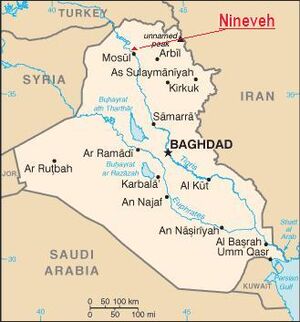
Map - Location of
Arbīl
Various Clans came to the aid of
Darius-III (the last king of the
Achaemenid Empire of
Persia) and were part of alliance in the battle of
Gaugamela (331 BC) formed by
Darius-III in war against
Alexander the Great at Arbela, now known as
Arbil, which is the capital of
Kurdistan Region in northern
Iraq.
ArrianThe Anabasis of Alexander/3a, Ch.8 writes....
Alexander therefore took the royal squadron of cavalry, and one squadron of the Companions, together with the
Paeonian scouts, and marched with all speed; having ordered the rest of his army to follow at leisure. The
Persian cavalry, seeing
Alexander, advancing quickly, began to flee with all their might. Though he pressed close upon them in pursuit, most of them escaped; but a few, whose horses were fatigued by the flight, were slain, others were taken prisoners, horses and all. From these they ascertained that
Darius with a large force was not far off. For the
Indians who were conterminous with the
Bactrians, as also the Bactrians themselves and the
Sogdianians had
come to the aid of Darius, all being under the command of
Bessus, the viceroy of the land of
Bactria. They were accompanied by the
Sacians, a
Scythian tribe belonging to the
Scythians who dwell in
Asia.[SUP][1][/SUP] These were not subject to Bessus, but were in alliance with
Darius. They were commanded by
Mavaces, and were horse-bowmen.
Barsaentes, the viceroy of
Arachotia, led the
Arachotians[SUP][2][/SUP] and the men who were called mountaineer
Indians. Satibarzanes, the viceroy of
Areia, led the
Areians,[SUP][3][/SUP] as did Phrataphernes the
Parthians, Hyrcanians, and Tapurians,[SUP][4][/SUP] all of whom were horsemen. Atropates commanded the
Medes, with whom were arrayed the
Cadusians, Albanians, and Sacesinians.[SUP][5][/SUP] The men who dwelt near the
Red Sea[SUP][6][/SUP] were marshalled by Ocondobates, Ariobarzanes, and Otanes. The
Uxians and Susianians[SUP][7][/SUP] acknowledged Oxathres son of Aboulites as their leader, and the
Babylonians were commanded by Boupares. The
Carians who had been deported into
central Asia, and the
Sitacenians[SUP][8][/SUP] had been placed in the same ranks as the
Babylonians. The
Armenians were commanded by Orontes and Mithraustes, and the
Cappadocians by Ariaoes. The
Syrians from the vale between
Lebanon and Anti-Lebanon (i.e.
Coele-Syria) and the men of
Syria which lies between the rivers[SUP][9][/SUP] were led by
Mazaeus. The whole army of
Darius was said to contain 40,000 cavalry, 1,000,000 infantry, and 200 scythe-bearing chariots.[SUP][10][/SUP] There were only a few elephants, about fifteen in number, belonging to the
Indians who live this side of the
Indus.[SUP][11][/SUP] With these forces Darius had encamped at
Gaugamela, near the river
Bumodus, about 600 stades distant from the
city of Arbela, in a district everywhere level;[SUP][12][/SUP] for whatever ground thereabouts was unlevel and unfit for the evolutions of cavalry, had long before been levelled by the Persians, and made fit for the easy rolling of chariots and for the galloping of horses. For there were some who persuaded Darius that he had forsooth got the worst of it in the battle fought at Issus, from the narrowness of the battle-field; and this he was easily induced to believe.


